The building
Friedrichstraße 107: a market hall, a circus and a revue palace
The address on your ticket has held shops, a circus, an experimental theatre and the revue house of today. Here is what Wikipedia reports.
Reserve your night ↗Quick answer
Friedrichstraße 107 is the Friedrichstadt-Palast. English Wikipedia says the site began in the 1860s as Berlin's first covered market hall, became a circus arena in 1873, and in 1919 turned into Max Reinhardt's Grosses Schauspielhaus, designed by Hans Poelzig. The present building opened on 27 April 1984. The Quatsch Comedy Club plays in a smaller room in the basement, so the vast main auditorium is not where your evening happens.
A street named for an elector
English Wikipedia says Friedrichstraße was inaugurated in 1688, took its present name around 1705, and is named after Frederick III, Elector of Brandenburg. The Admiralspalast opened on the street as a theatre in 1910. In the Cold War the street was split by the Berlin Wall and held Checkpoint Charlie. It is a road that has been through a great deal and kept its entertainment reputation.
The market hall and the circuses
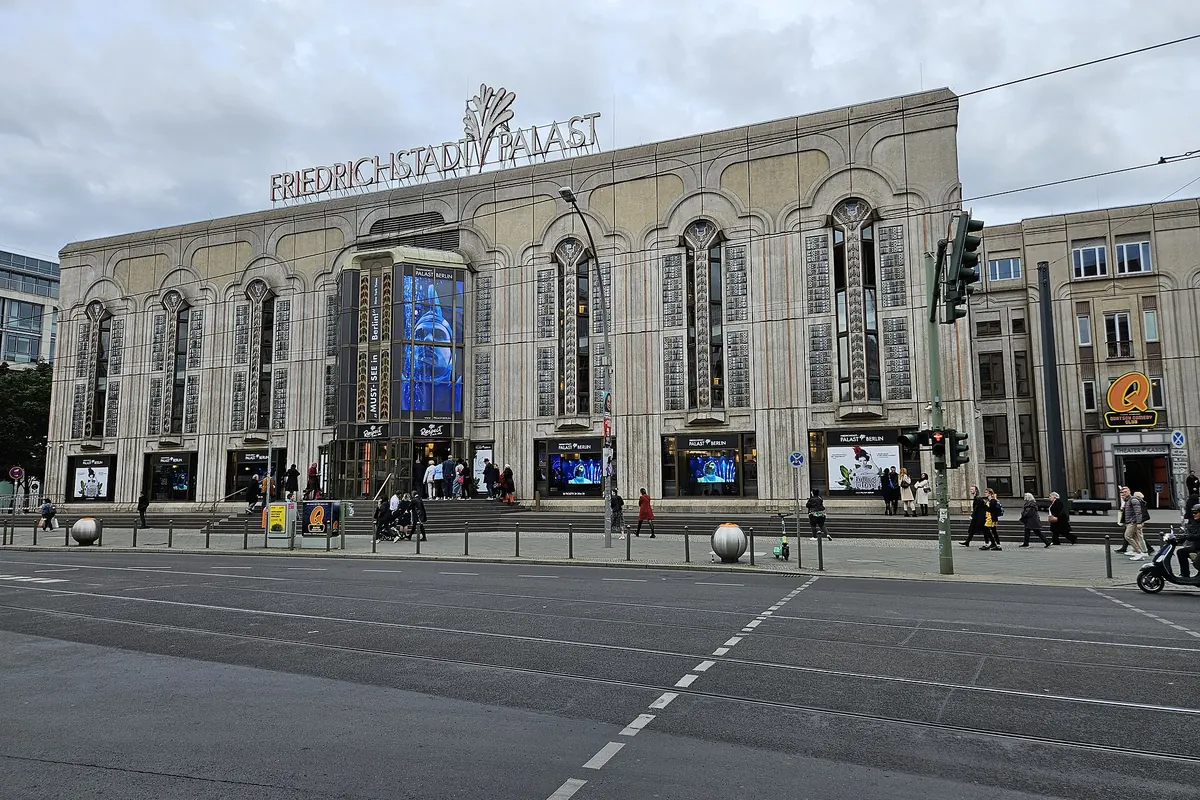
The Friedrichstadt-Palast article says the building was constructed between 1865 and 1867 as Berlin's first covered market hall, opened in September 1867 and closed in April 1868 for economic reasons. In 1873 it was converted into a circus arena seating about 5,000. Circus Renz ran it from 1879 until July 1897, and Circus Schumann followed from October 1899 until 31 March 1918.
Reinhardt and Poelzig
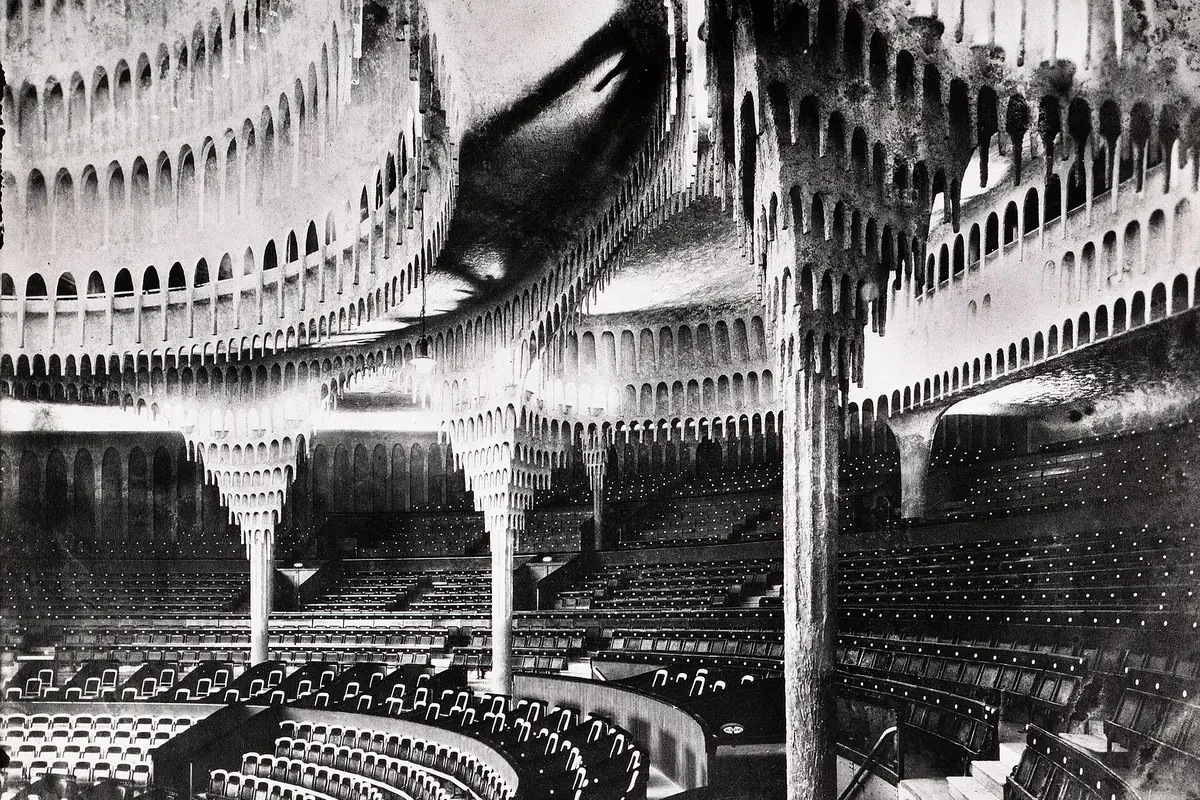
In 1918 Max Reinhardt took over the building, and Hans Poelzig rebuilt it as the Grosses Schauspielhaus, with an 18-metre revolving stage. It opened in November 1919 with The Oresteia. The photograph here is Poelzig's own image of the hall, whose stalactite-like ceiling made it famous.
War, division and rebuilding
The Nazi era renamed the house Theater des Volkes, and air raids in March 1945 caused major damage. The city took the building over in 1949 and restored the Friedrichstadtpalast name. It closed on 29 February 1980 because of subsidence in its foundations and was demolished once the ensemble had moved to its new home.
The present building
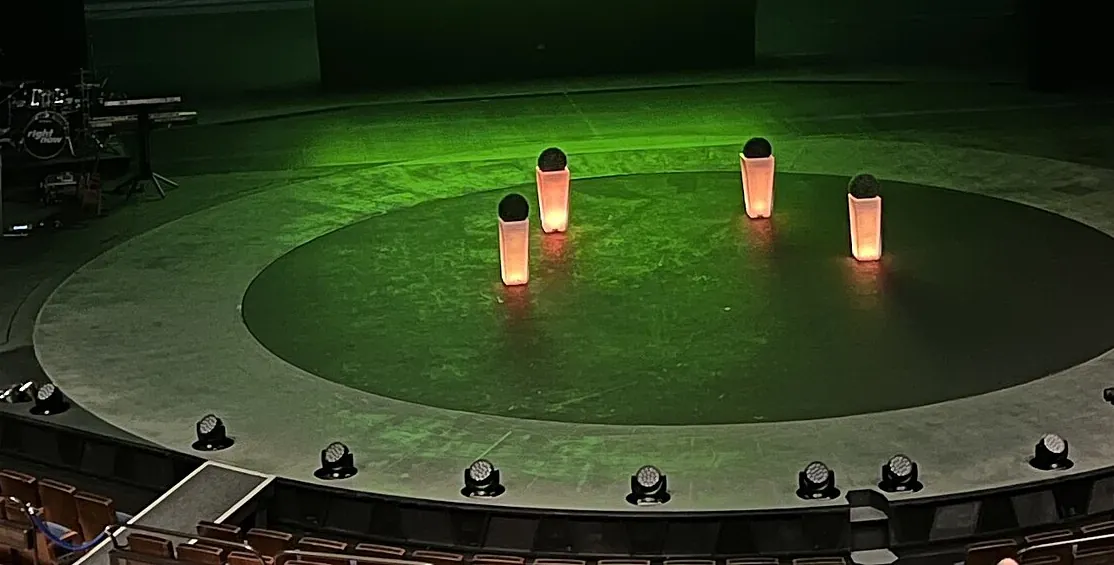
The current Palast opened on 27 April 1984, about 80 metres wide and 110 metres long, with a capacity of 1,895 according to English Wikipedia. The comedy club plays in a separate room in the basement of this building, which German Wikipedia calls the Kleine Revue.
Spelling and names
Sources write the name in two ways, Friedrichstadt-Palast and Friedrichstadtpalast, and mean the same house. The suffix on the building also changed through its life: it was a market hall, a circus, the Grosses Schauspielhaus and, under the Nazis, the Theater des Volkes. When you read about the address, check which of those eras a source means.
What the sources do not settle
The English Wikipedia article describes the present stage as the largest in the world and the proscenium as the widest in Europe, but it flags both claims as lacking adequate sourcing, so this guide does not repeat them. The numbers it does give, such as the 1,895 seats and the 1984 opening, are stated plainly in the article.
Frequently asked questions
Is the club in the same hall as the Palast revue?
No. German Wikipedia places the club in the Kleine Revue, a room in the basement of the building.
Is the Palast building old?
The present building opened in 1984. The site, however, has held entertainment venues since the 1870s.
Sources